Service 01
Watch servicing and repair
Mechanical and quartz, dress watches and divers, everyday pieces and the one that was handed down. Every watch is looked at before anything is quoted, and nothing is opened without your say-so.
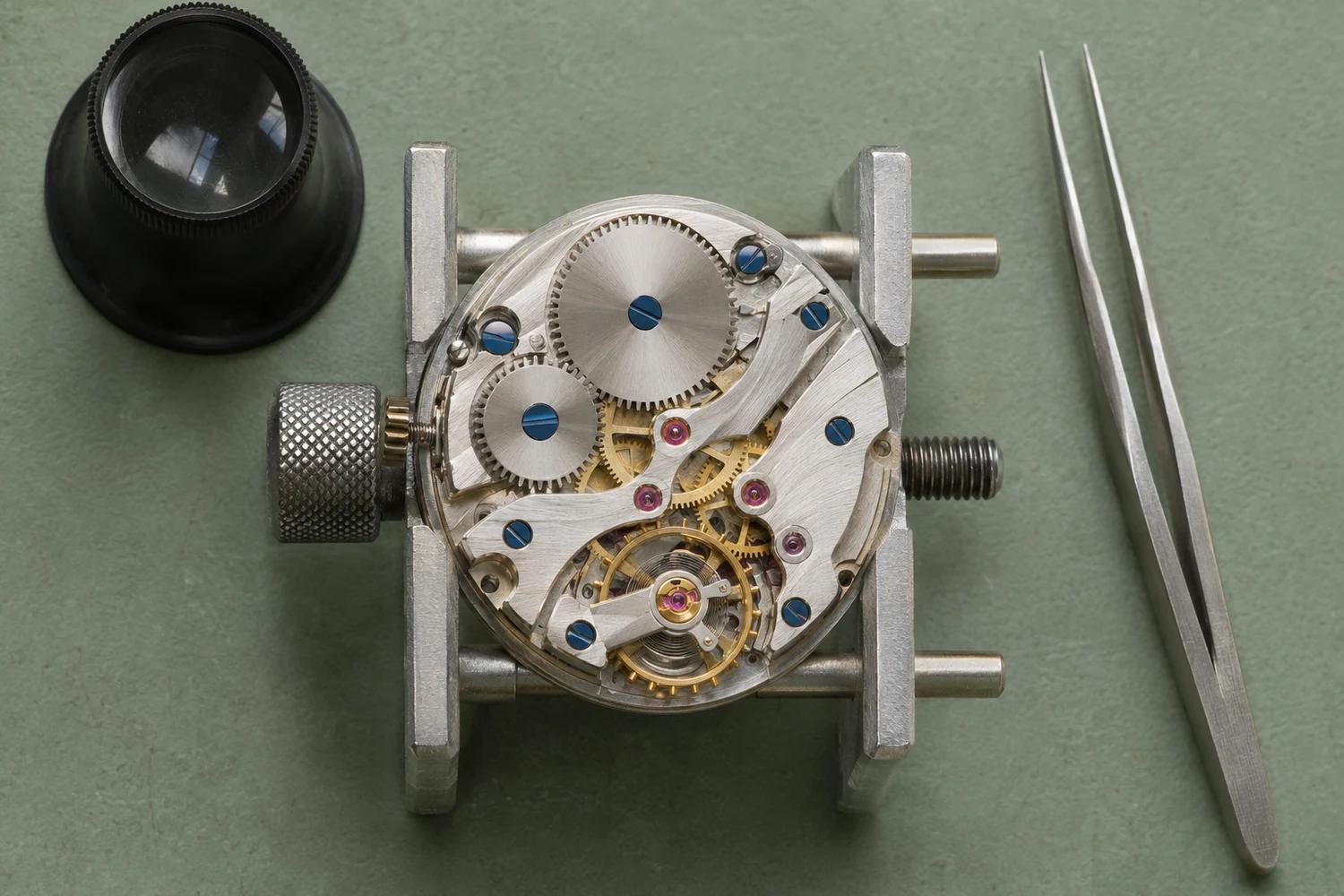
A watch kept running is a watch kept.
What servicing actually means
A mechanical watch runs on a few drops of oil spread across dozens of moving parts. Those oils thin and migrate with age, and once they do, the parts they were protecting begin to wear against one another. A service strips the movement down, cleans every component, replaces what has worn, re-lubricates, reassembles and regulates the watch back to its proper rate.
A quartz watch asks for less but not for nothing. Seals harden, batteries leak if they are left in once they are flat, and a crown pushed back carelessly lets in the moisture that does the real damage. Most quartz work is a battery, a gasket and a pressure test — done properly, it is the difference between a watch that lasts and one that quietly corrodes.
Not every watch needs the full treatment. Plenty of what comes in is a crystal, a crown, a stretched bracelet or a rate that has drifted a few seconds a day. We will tell you which it is, and we would rather do the smaller job than sell you the larger one.
- Movements
- Mechanical, automatic and quartz
- Estimate
- In writing, before any work begins
- Your watch
- Photographed on arrival and on completion
- Parts
- Originals returned to you where they are replaced
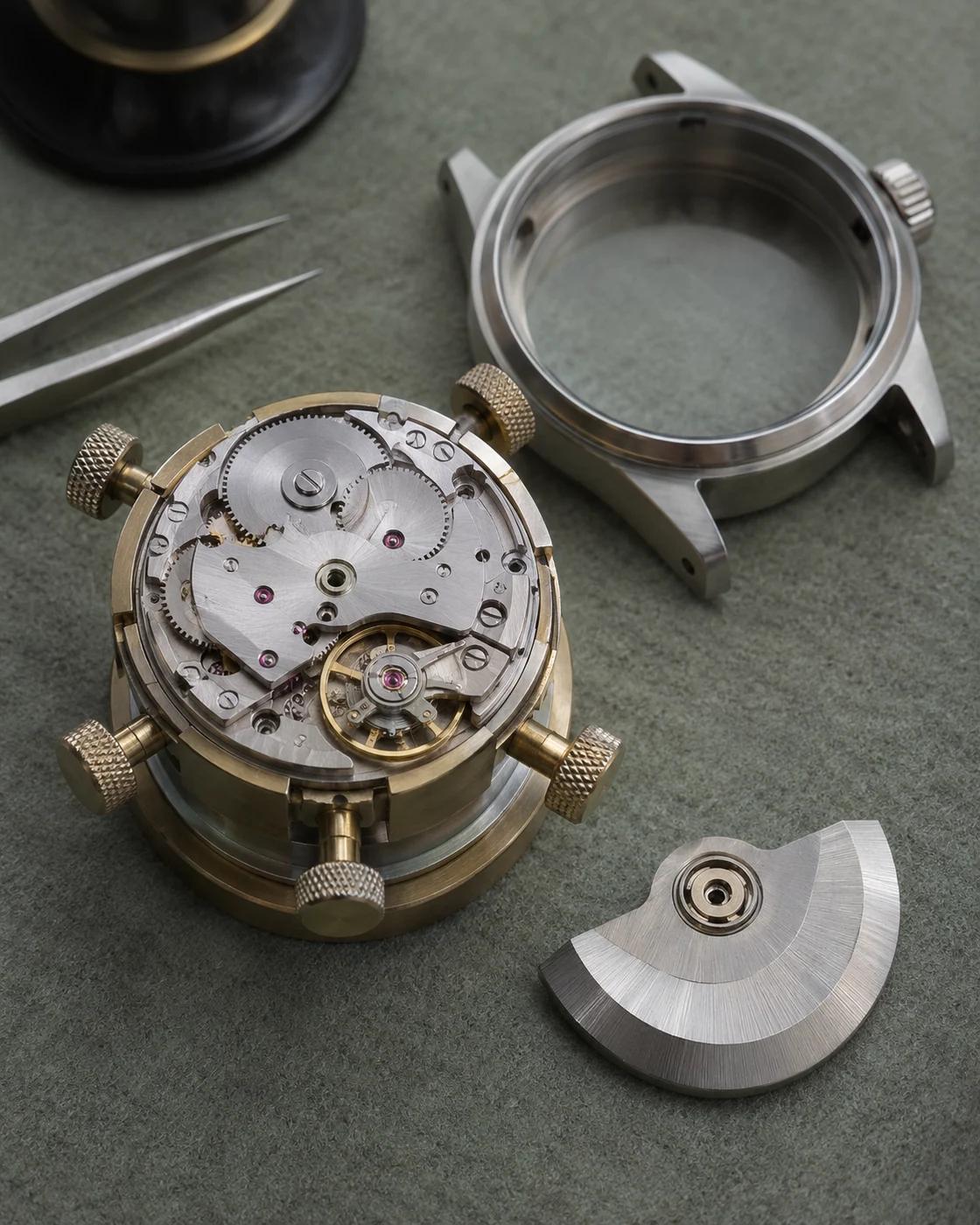
What is involved
What the work covers
Most watches need one or two of these rather than all of them. The estimate says which, and why.
Full service
The movement is stripped to its components, cleaned, inspected part by part, re-lubricated, reassembled, regulated and timed in several positions before the case goes back together.
Battery and seals
A new cell, fresh gaskets at the caseback and crown, and the case closed to its proper torque. Flat batteries are removed promptly rather than left to leak.
Water resistance testing
Dry and wet pressure testing after any case has been opened, so a watch described as water resistant has been shown to be — and told plainly if it no longer is.
Crystal and case work
Scratched or chipped crystals replaced, cases and bracelets refinished where the original lines allow it, and left alone where refinishing would soften them.
Bracelets and straps
Stretched bracelets assessed, links and pins replaced, clasps tightened, and straps fitted to the right length with spring bars that match the lug width.
Timing and regulation
Rate measured on a timing machine in several positions, adjusted to the movement's own tolerance, and the readings shown to you with the finished watch.
Step by step
How it works
Four steps, and you are asked before the one that costs money.
Tell us about the watch
Send the maker, the model or reference if you know it, and what the watch is doing — or not doing. Photographs of the dial, caseback and any damage help more than a description.
Assessment
The watch is examined, timed as it arrives, and photographed. We establish what it needs rather than what it could have, and whether any parts are likely to be difficult to find.
Written estimate
You receive the work proposed, what it addresses and what it will cost, in writing. Nothing proceeds until you agree to it, and if you would rather not, the watch comes back as it came.
Work, test and return
The agreed work is carried out, the watch is tested and timed, and you see the result before it is returned to you, packed properly and tracked.
The case for it
Why have it done here
- You decide before we start
- No work begins without a written estimate you have agreed. A watch that arrives for a battery leaves with a battery, not with a service it did not need.
- Told as it is
- If a watch is not worth the service it would take, we will say so. If a case should not be refinished, we will leave it. Neither of those is the answer that sells more work.
- Your parts stay yours
- Where a component is replaced, the original comes back to you unless you ask us not to bother. On a watch with any history, that matters.
- A record of the work
- Photographs on arrival and completion, the work carried out, and the timing figures — kept, and sent to you, so the next person to open the watch knows what was done.
Practical
Before you send a watch
- Sending it safely
- Write to us first and we will tell you how to pack and send it, and how it will be covered in transit. Please do not post a watch to us without arranging it.
- Straps and buckles
- Send the watch on its own strap or bracelet if the problem involves it. Otherwise keep anything you would hate to lose, including signed buckles, at home.
- Parts availability
- Some older and discontinued movements need parts that are no longer made. Where that is the case we will tell you at the estimate stage rather than after taking the watch apart.
- What we will not do
- We will not fit a part that is wrong for the movement, refinish a case where it would damage its lines, or replace a dial or hands on a piece whose originality is part of its value, without discussing it with you first.
Often next
Related services
- Service 02
Jewellery repair & restoration
Ring resizing, claw and setting work, chain and clasp repairs, pearl restringing, and careful restoration of older pieces.
- Service 04
Valuations
Written valuations for insurance, probate and private sale, with each piece described, measured and photographed.
- Service 06
Selling & part-exchange
Sell a watch or a piece of jewellery outright, or put its value towards something from the window.
Tell us what the watch is doing
Send the maker, the model if you know it, and what you have noticed. We will tell you what we think it needs and what it would cost before anything is opened.